
Introduction
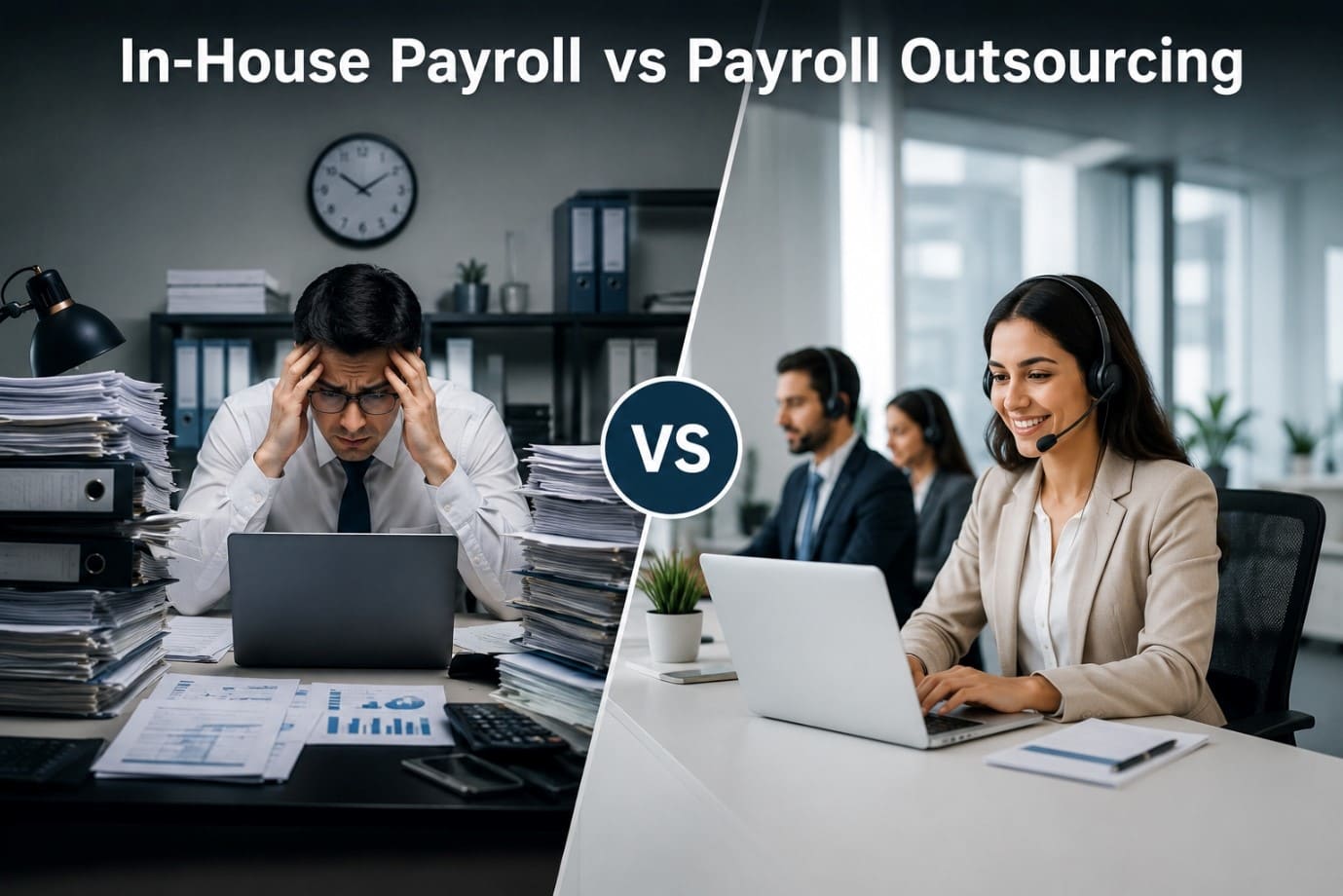
Payroll is a fundamental business function. Employees expect to be paid accurately and on time, while employers need to manage taxes, superannuation, records, and reporting requirements correctly. As a business grows, owners often face an important question: should payroll remain in-house or be outsourced to a professional provider?
There is no universal answer. The right approach depends on the size of the business, internal resources, payroll complexity, and long-term goals.
Key Differences
1. Start With the True Cost of Payroll
Managing payroll internally may initially appear more affordable. However, the total cost can include employee wages, payroll software, training, administration, and time spent correcting errors.
Outsourcing involves a service fee, but it can reduce the need for dedicated internal resources. Businesses should compare the complete cost of both approaches rather than looking only at the software subscription or outsourcing fee.
2. Consider the Complexity of Your Payroll
Payroll becomes more complicated as a business adds employees, locations, pay arrangements, and benefits.
Businesses may need to manage:
-
PAYG withholding
-
Superannuation
-
Employee leave
-
Different pay rates
-
New employee onboarding
-
Payroll reporting
3. Single Touch Payroll obligations
If payroll has become difficult to manage internally, professional assistance may provide greater efficiency and confidence.
4. Evaluate Internal Expertise
In-house payroll requires someone with the appropriate knowledge and attention to detail. Payroll staff also need to stay informed about changes to relevant requirements and processes.
For larger businesses, having dedicated payroll expertise internally may make sense. Smaller businesses may not have enough payroll activity to justify employing a specialist.
Outsourcing can provide access to experienced payroll professionals without requiring a business to maintain that expertise entirely in-house.
5. Think About Accuracy and Compliance
Payroll errors can affect both employees and employers. Incorrect payments, missed reporting requirements, or inaccurate deductions can create administrative problems and potentially lead to compliance concerns.
An outsourced payroll provider can establish structured processes for calculations, record-keeping, and reporting. However, businesses should still choose providers carefully and ensure responsibilities are clearly defined.
6. Compare Control and Convenience
One advantage of in-house payroll is direct control. Business owners or internal staff can access payroll information immediately and make changes within their established processes.
Outsourcing offers convenience by transferring much of the administrative workload to an external provider. However, businesses should understand how information is shared, who approves payroll, and how quickly changes can be processed. A clear communication process is essential when payroll is managed externally.
7. Consider Data Security
Payroll contains sensitive employee information, including payment details and personal records. Whether payroll is handled internally or externally, businesses need appropriate security procedures.
When outsourcing, ask potential providers how payroll information is stored, accessed, and protected. Businesses should also establish appropriate user permissions and ensure confidential information is handled responsibly.
Conclusion
Choosing between payroll outsourcing and in-house payroll requires more than comparing costs. Businesses should consider payroll complexity, internal expertise, compliance, accuracy, security, control, and future growth.
For many small and growing businesses, outsourcing can provide practical support while reducing the burden of payroll administration. However, the right solution ultimately depends on the organization’s specific needs, resources, and priorities.
