
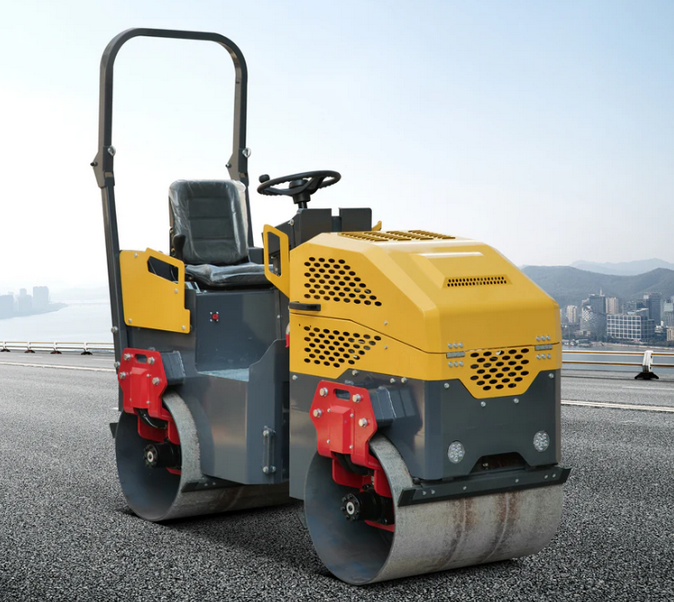
If you are planning paving, patch repair, driveway work, or site preparation, choosing the right compaction machine can make a major difference in finish quality, efficiency, and operating cost. A compact roller is not only about weight. You also need to think about drum design, vibration system, working width, transport convenience, and the type of material you plan to compact most often. For buyers comparing small construction equipment, the MMS collection is a useful starting point because it focuses on compact double-drum models designed for practical field use. You can review the current collection here: https://www.mmsce.com/collections/road-roller. The page currently shows three compact models with hydraulic vibrating, double steel wheel configurations aimed at asphalt, gravel, and soil compaction.
Why Proper Compaction Matters
Compaction is one of the most important steps in building a stable surface. Whether you are working with asphalt, granular base, or soil, the goal is to reduce air voids, increase density, and create a stronger, more uniform surface. Industry compaction guides explain that static pressure, vibration, impact, and manipulation are the main forces used in compaction, and vibratory equipment is especially effective when density and surface consistency matter.
For contractors, that translates into practical benefits. Better compaction helps reduce settlement, supports structural integrity, and improves the finish of paved or prepared surfaces. Tandem vibratory units are commonly used on soil, sub-base, and asphalt because they can deliver strong production with smooth steel drums and vibration-assisted compaction.
A Quick Look at the MMS Collection
The current MMS collection page shows three compact models: the MS1000, MS1500, and MS2000. All three are presented as hydraulic vibrating, double steel wheel machines, with visible listed prices of $4,999, $6,499, and $8,999 respectively. The page also states that the company offers a one-year warranty, lifetime technical support, and warehouse coverage on both the East Coast and West Coast of the United States.
Model snapshot
MS1000
-
1.0-ton class machine
-
Working weight: 1100 kg
-
Length: 2100 mm
-
Width: 860 mm
-
Height: 1600 mm
-
Listed price: $4,999
MS1500
-
1.5-ton class machine
-
Working weight: 1380 kg
-
Length: 2200 mm
-
Width: 920 mm
-
Height: 1620 mm
-
Listed price: $6,499
MS2000
-
2.0-ton class machine
-
Working weight: 1980 kg
-
Length: 2300 mm
-
Width: 1120 mm
-
Height: 1650 mm
-
Listed price: $8,999
This size spread is useful because it gives buyers a simple step-up path. You can start with a lighter unit for tighter, lighter-duty jobs, move to a mid-range machine for regular contractor work, or choose the heaviest option for broader surfaces and higher production needs.
How to Match Machine Size to the Job
The most common mistake buyers make is focusing only on price instead of matching the machine to job type. A compact unit can be excellent value, but only if its width, weight, and vibration capability align with the materials you work on every week.
1-ton class: best for lighter and tighter work
A 1-ton class machine is often a smart choice for smaller contractors, maintenance crews, residential paving teams, and businesses that need easy transport and storage. It can be a practical fit for:
-
Driveways
-
Walkways
-
Garden paths
-
Small parking patches
-
Narrow trench restoration
-
Landscaping support work
Because the MS1000 has the narrowest width in the collection, it should be easier to maneuver in confined access areas where a larger machine may feel excessive. That makes it appealing for businesses that want flexibility without stepping into heavier equipment too early.
1.5-ton class: the balanced choice
For many buyers, the middle size is often the most practical. A 1.5-ton machine usually gives you a useful balance between compact dimensions and stronger compaction capability. It can suit small commercial paving, municipal repair, property maintenance, and repeated day-to-day contractor use where the 1-ton option may feel a little light and the 2-ton option may be more than you need.
If your workload includes both small private jobs and moderate surface areas, the mid-range model can be the most versatile investment. It helps bridge the gap between maneuverability and productivity. The MS1500’s dimensions and working weight suggest exactly that role in the current lineup.
2-ton class: better for wider coverage and stronger production
When surface area increases, a heavier machine starts to make more sense. Larger drum width and greater operating weight can help improve coverage and reduce the number of passes needed on bigger jobs. Compaction guidance has long emphasized that drum width and roller configuration affect production efficiency and surface coverage, which is why heavier tandem units are often favored for broader paving work.
The MS2000, with the greatest width and working weight in the collection, is the most logical option for buyers who prioritize higher output, broader compaction paths, and more authority on demanding surfaces. For contractors working on larger drive lanes, extended paths, or repeated commercial jobs, that extra size may justify the higher purchase price.
Features That Deserve More Attention Before You Buy
A buyer should not choose only by tonnage. Several practical features influence how well a compaction machine performs in the field.
Hydraulic vibrating system
The collection highlights hydraulic vibrating, double steel wheel designs. That matters because vibration adds dynamic force to the compaction process, helping the machine achieve density more efficiently than static pressure alone in many applications. On asphalt and granular materials, steel drum vibratory machines are widely used because they can improve productivity and finish quality.
Double steel wheel layout
A tandem, double-drum setup is a major advantage when you want smooth, even surface results. Double-drum vibratory rollers are commonly used for asphalt and other flat compaction work because both drums contribute to uniform pressure and finish quality. This style is especially useful when appearance and consistency matter, not just raw ground pressure.
Machine width and site access
Width affects more than coverage. It also affects whether the machine can enter gates, work near edges, or navigate narrow project areas. A compact machine that fits your common jobsites can save time and reduce frustration. That is why a buyer should compare overall width just as carefully as price or engine output. In the MMS collection, the progression from 860 mm to 1120 mm gives buyers clearly different access profiles.
Support and ownership value
The collection page highlights factory-backed pricing, a one-year warranty, lifetime technical support, and U.S. warehouse coverage. Those details matter because downtime can erase any savings from a lower purchase price. Support availability, parts access, and response speed often determine whether a machine is a bargain or a burden over the long term.
Best Use Cases for Compact Rollers
Compact rollers are often a better fit than large road-building machines for businesses that need versatility. Common use cases include:
-
Residential asphalt work
-
Repair patches and overlays
-
Gravel path preparation
-
Base and sub-base compaction
-
Farm or estate road maintenance
-
Sports and recreation surface work
-
Landscape construction support
-
Small commercial paving jobs
Because tandem vibratory rollers are suited to soil, sub-base, and asphalt compaction, they can serve contractors who handle mixed materials rather than just one narrow job type. That flexibility can make a compact machine a stronger business asset.
How to Evaluate Buying Value, Not Just Purchase Price
A low upfront price can look attractive, but smart buyers compare total working value instead. Ask these questions before making a decision:
-
Will the machine handle most of your regular job sizes?
-
Is the width right for the sites you enter most often?
-
Do you need a lighter unit for transport convenience?
-
Will a heavier model reduce passes and labor time?
-
Is warranty support easy to reach?
-
Can you get technical help quickly if something goes wrong?
-
Will parts and service access support long-term uptime?
For some contractors, the smallest machine is the best return because it covers the majority of their day-to-day work. For others, stepping up to a 1.5-ton or 2-ton unit may improve production enough to justify the added cost. The right answer depends on workload, not just budget.
Practical Operating Tips for Better Results
Even a good machine can perform poorly if it is operated carelessly. A few field habits can improve results and protect your investment:
-
Inspect drums, controls, fluid levels, and vibration systems before starting
-
Match vibration settings and travel speed to surface conditions
-
Avoid rushing passes just to finish faster
-
Maintain overlap for consistent coverage
-
Keep drums clean when working on paving jobs
-
Do not use more machine than the surface can handle
-
Follow a routine maintenance schedule instead of waiting for problems
Compaction manuals consistently emphasize that good outcomes depend on both machine selection and jobsite technique. The operator still plays a major role in achieving density and surface consistency.
Why Compact Machines Appeal to Growing Contractors
For small and growing companies, compact equipment often makes more financial sense than oversized fleet purchases. A smaller roller can be easier to transport, easier to store, and easier to deploy across different job types. It can also help a business expand service capacity without immediately taking on the cost and complexity of full-size road construction equipment.
That is where the MMS collection stands out as a practical buyer-focused range. Instead of offering an overwhelming catalog, it presents a narrow selection of compact double-drum models that are easier to compare by size, price, and likely use case. For contractors who want a simple buying path, that kind of focused lineup can be helpful.
FAQ
What size compactor is best for residential paving work?
For many residential paving, repair, and path projects, a 1-ton or 1.5-ton compact machine is often the most practical choice. The lighter option can be easier to move and maneuver, while the mid-size option may offer a better balance between compact size and stronger output. Your best choice depends on job width, material type, and how often you work on larger surfaces.
Is a tandem vibratory model good for asphalt and gravel?
Yes. Tandem vibratory machines are widely used for asphalt, soil, and granular base work because vibration and smooth steel drums help improve density and surface consistency. This is one reason double-drum compactors remain popular for paving and finishing applications.
What should I compare before buying from an online collection?
Start with working weight, drum width, overall machine dimensions, vibration system, support terms, and whether the model matches the jobs you perform most often. On the MMS collection page, the three visible machines differ clearly in weight, size, and price, which makes comparison easier for buyers.
Does after-sales support really matter for compact equipment?
Absolutely. Warranty, technical support, and parts access can protect you from long delays and unexpected repair stress. A lower purchase price is only valuable if the machine stays productive when you need it.
Conclusion
A smart equipment purchase starts with understanding your real workload. The best machine is not always the biggest or the cheapest. It is the one that fits your most common jobs, delivers reliable compaction, and comes with support that protects uptime. In the current MMS lineup, buyers can choose between three compact double-drum models that cover light, medium, and heavier small-project needs, with clear differences in width, working weight, and price. If you want to compare the current options directly, review the collection here: https://www.mmsce.com/collections/lawn-mower. A careful comparison now can help you buy equipment that works harder, lasts longer, and fits your projects more naturally.
